
Immediate Reporting of Serious Security Incidents: Preparation, Responsibilities and Documentation
Immediate reporting of serious security incidents: thresholds, responsibilities and templates for preparation, initial reporting, containment and exercises.

A serious security incident may require immediate notification to Israel's Privacy Protection Authority while you also limit disruption to operations and customer service. Prepare database classifications, assign responsibilities and create a reporting template you can use even when information is incomplete. This guide covers preparation, initial reporting, containment and exercises, with deliverables to verify completion of each stage.
Assess reporting obligations while containing the incident
Assess the need to report while limiting exposure and maintaining customer service. The Privacy Protection Authority's reporting service states that serious security incidents must be reported immediately and refers to regulation 11(d) of Israel's Privacy Protection (Data Security) Regulations, 5777–2017.
Ask legal counsel to assess your exposure under applicable law and the circumstances of the incident.
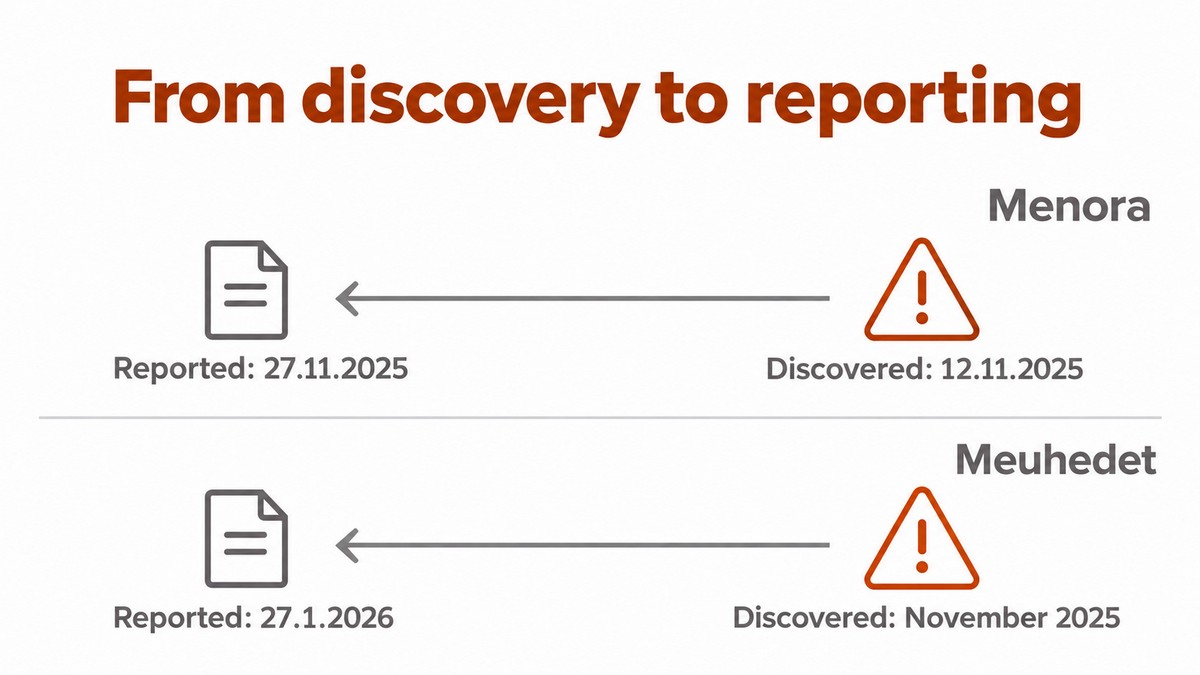
Operational documentation and reporting thresholds under the Authority's guidance
As an operational recommendation, document alerts, facts, decisions and actions even before a reporting obligation has been established. According to the Authority's reporting service guidance, at the medium security level, reporting is required when a substantial portion of the database is used without authorization or beyond the scope of authorization, including disclosure, copying, transfer or provision of information, or when a copy of the information is created. The guidance also covers harm to the integrity of information in a substantial portion of the database, including encryption or denial of access, even when the copy remains within the database systems.
At the high security level, the Authority's guidance covers entry into database systems that enables access to information without authorization or beyond the scope of authorization, even without proof of actual use. It also covers such access when there is no way to determine the extent or duration of exposure or the actions performed. The absence of proof of copying is therefore insufficient to rule out a reporting obligation. Confirm the database's security level and applicable obligations with legal counsel; if the service page conflicts with the law, the law takes precedence.
Business scenario to investigate | Questions to establish and document |
|---|---|
Open SharePoint link | What information is accessible, to whom, from which database, and are access records available? |
Compromised Microsoft 365 account | Which mailboxes and files were accessible, and did permissions or forwarding rules change? |
CRM export sent by mistake | Who received the file, how extensive is it, and was an unauthorized copy created? |
Incorrect payroll-system permission | Who could view which data, and for how long? |
Ransomware without confirmed leakage | What information was encrypted or blocked, and what are the database's security level and extent of impact? |
1. Prepare your mapping, authority and contact channels
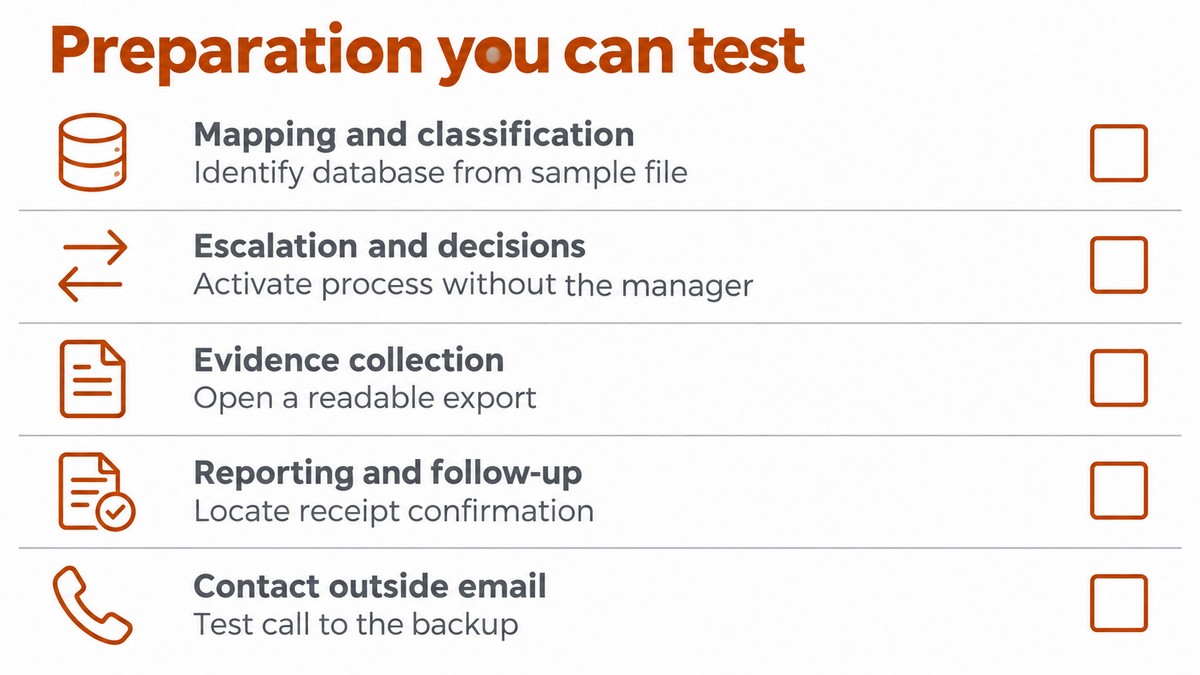
Define in contracts and procedures which suppliers update the business, who provides evidence and who verifies submission to the Authority; do not assume the supplier reported on your behalf. You can connect this to your business continuity and disaster recovery plan, so information handling and continued customer service rest on clear responsibilities.
2. Submit an initial report and document the submission
The Authority's service states that reporting must be immediate and refers to regulation 11(d). When the obligation applies, do not wait for a full investigation or the supplier's response: report what is known and mark what remains under investigation. Access the online submission service through the verified reporting service page. If the GDPR may also apply, request a separate legal assessment; deadlines under another law do not establish that you may delay reporting in Israel.
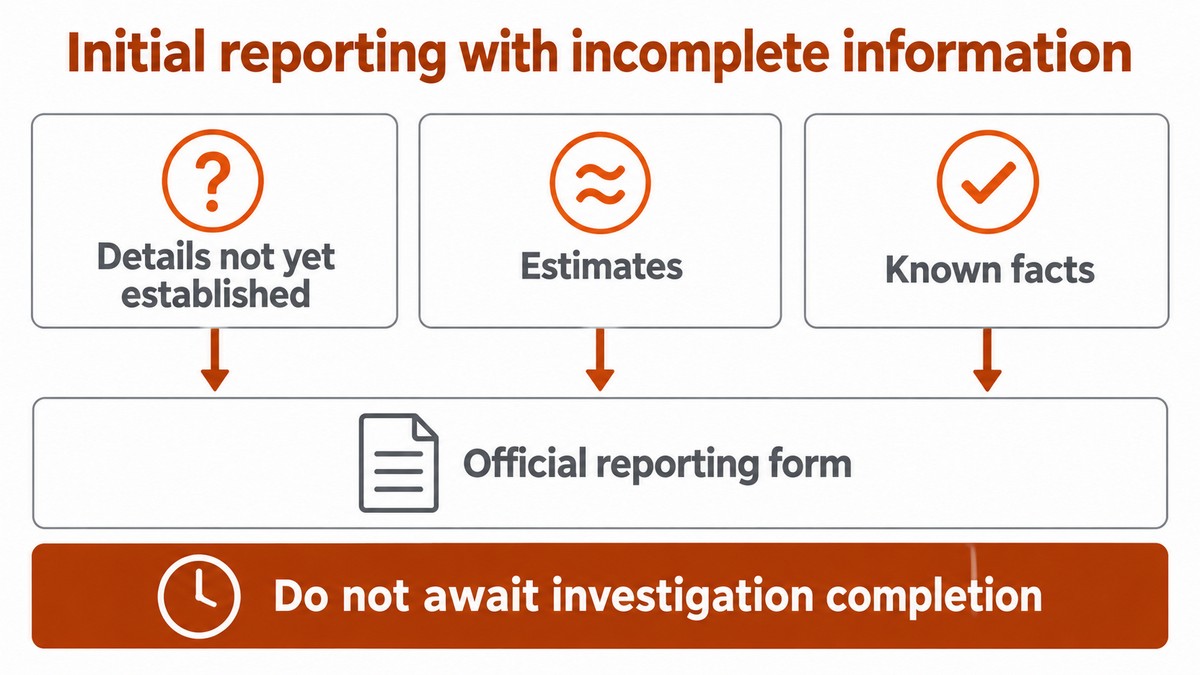
Copyable reporting template and completed example
Use the following fields as a working draft and adapt it to the submission fields linked from the Authority's service page. This fictional example is for exercises only; it does not describe a customer or determine that reporting is required.
Field | Example entry for an exercise |
|---|---|
Organization and reporter | Example business; operations manager; business phone and email to be entered in the form |
Database and supplier | Customer database; CRM export folder in SharePoint; supplier details under review |
Discovery and incident start | Discovered today following an employee report; exact times and exposure start under investigation |
Currently known | A link to a customer file permitted access without the intended restriction |
Information and scope | Names and contact details; record and visitor counts not yet verified |
Actions | Link revoked; configuration evidence preserved; log collection started |
Uncertainty | Exposure duration, downloads and database affiliation under investigation |
Follow-up and contact | Incident manager is coordinating findings; full contact details attached for further inquiries |
3. Contain the incident and preserve evidence
For a compromised Microsoft 365 account, follow Microsoft's guidance for responding to a compromised account, as appropriate for your environment and available permissions. Contacting the Israel National Cyber Directorate and its 119 hotline provides access to initial professional assistance, but does not replace reporting to the Privacy Protection Authority; neither does contacting the police. Assess separately with legal counsel whether customers and employees must be notified.
Copyable decision log
When | Fact or uncertainty | Decision and rationale | Owner | Evidence and follow-up |
|---|---|---|---|---|
At discovery | Alert description and source | Open incident and escalate | Incident manager | Reference to original evidence |
During reporting assessment | Database, classification and available information | Report or record a reasoned conclusion for reassessment | Authorized decision maker and legal counsel | Finding that could change the decision |
After submission | What was reported and what is missing | Verify receipt and provide additional information | Submitter and checker | Submission record and open tasks |
4. Test the procedure and close gaps
Updated: 29.10.2026.